Short answer: if the headlight is cloudy on the outside, restoration will bring it back to clear. If it's cracked, taking on water or breaking down inside, restoration won't solve it and replacement is the answer.
Why headlights go yellow
The lenses are polycarbonate, protected from the factory by a thin UV layer. Over time that layer breaks down under sun, salt and grit thrown up by the wheels. Once it's gone, the surface starts to haze and yellow — first on the top face, which gets the most sun. It isn't dirt you can wash off: the surface itself is damaged.
When restoration helps
- a hazy or yellowed surface on the outside, with the headlight clean inside
- fine scratches and sandblasting from stones
- weak light output, but the bulb and reflector are fine
- the lens is intact, with no cracks and no fogging inside
When restoration makes no sense
- water gets into the headlight or condenses inside — the problem is the seal, not the surface
- the lens is cracked or a mounting tab is broken off
- the inner surface is hazy or the reflector's coating is peeling
- the lens has already been sanded several times and is noticeably thinner
How restoration works
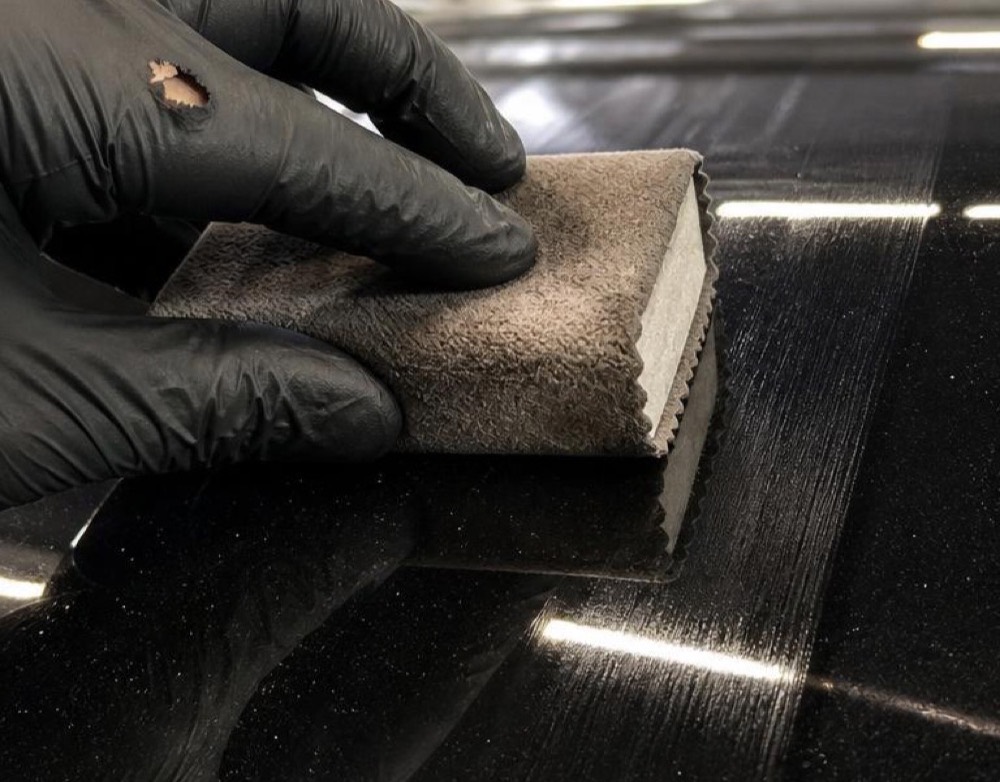
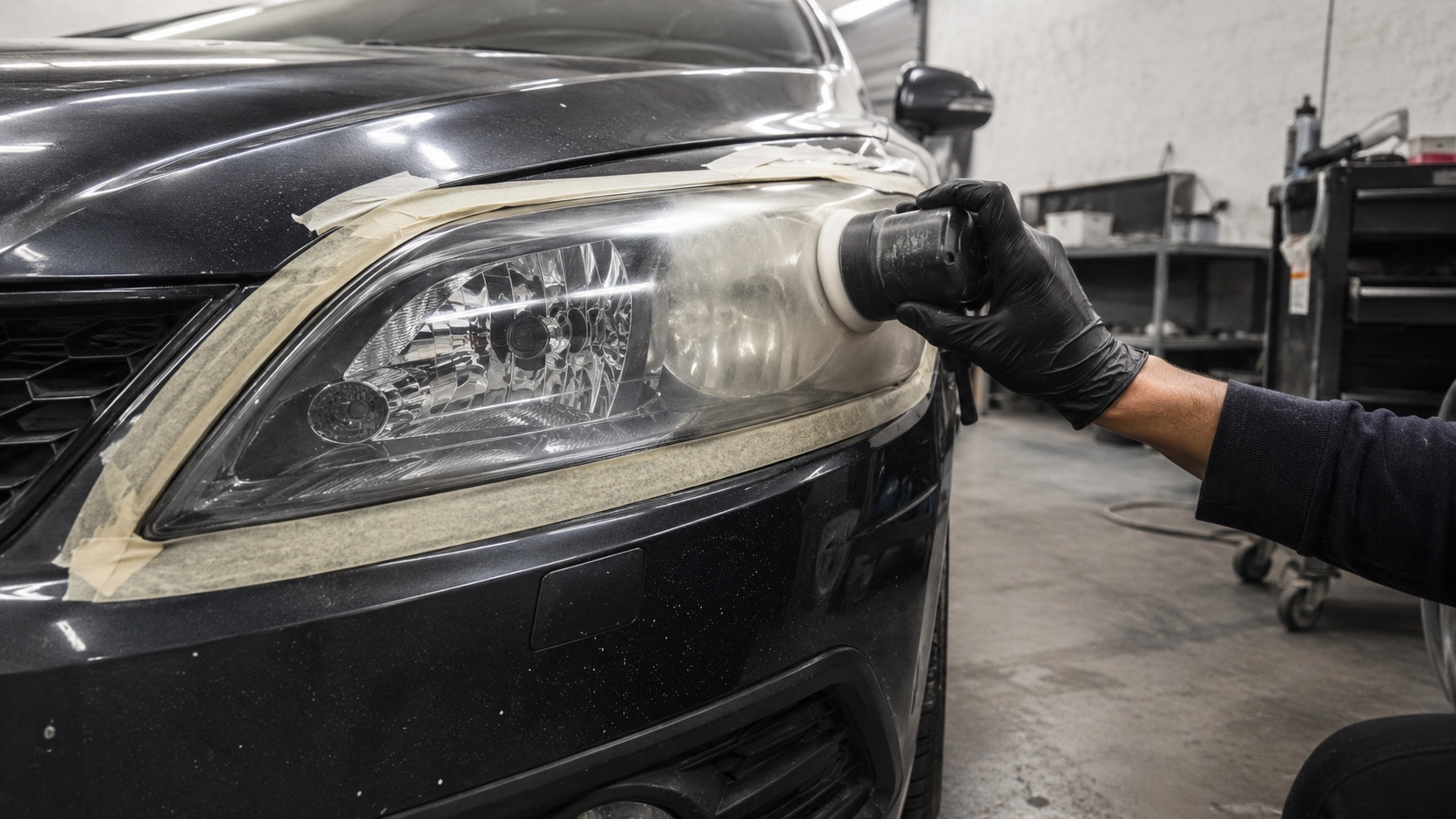
The surface is sanded through several grades to remove the degraded layer and scratches, then polished back to clear. The last step is applying a protective layer — without it the polycarbonate is left with no UV protection and will haze again within a season. That's exactly the step cheap restorations skip.
What the restoration costs
Restoration costs 1,500 CZK per headlight or 3,000 CZK for a pair. The protective coating at the end is always included — without it the headlight would haze over again soon. Send us the car model and a photo — we will come back with a date.
DIY restoration: what to expect
Pastes from online shops can brighten the surface temporarily. The catch is that polishing without protection also removes what's left of the original UV layer — the headlight then hazes faster than before. If you try it at home, expect the result to last one season without a protective coating.
Frequently asked questions
How long does restoration last?
With a protective layer applied, years; without it, usually one season. Life also depends on whether the car stands outside in the sun or in a garage.
Will the light output improve?
Yes, a clear surface lets through noticeably more light than a hazy one. But if the problem is a weak bulb or a damaged reflector, restoration won't fix it.
Will I pass the technical inspection with hazy headlights?
Heavily hazed or damaged headlights are a defect at inspection because they affect road illumination. Restoration is usually cheaper than a new headlight.
Do you have to remove the headlight?
It depends on the car. On some, careful masking on the car is enough; on others it's cleaner to take the headlight off — we'll tell you upfront what yours needs.
Can glass lenses be restored too?
Glass lenses on older cars don't yellow the way polycarbonate does and are handled differently. Send a photo and we'll say whether restoration makes sense.
What to do now
Photograph the headlights from the front and from above in daylight. From the photos we can tell whether only the surface is hazy or the problem is inside — and we'll give a preliminary price and timeline.