Short answer: wax is cheap protection for a few months. Ceramic lasts years, makes washing easier and deepens the colour, but doesn't protect against stones. The only protection against mechanical damage is PPF film — and it can be applied to the front panels alone.
Compared in three lines
| Wax / sealant | Ceramic coating | PPF film | |
|---|---|---|---|
| Protects against stone chips | no | no | yes |
| Resistance to chemicals and salt | low | high | high |
| Makes washing easier | partly | markedly | yes |
| Deepens the colour | slightly | yes | no change in appearance |
| Lifespan | months | years | years |
| Can it be removed | no (wears off) | by machine polishing | yes, by peeling off |
Wax and a standalone ceramic coating for the paint are priced after inspection — it depends on the size of the car and the condition of the paint. As a guide: paint correction with ceramic coating from 15,000 CZK, ceramic coating for glass 2,000 CZK. With PPF it comes down to which panels you cover: door handle area from 4,000 CZK, mirrors and headlights 5,000 CZK, front bumper and bonnet from 10,000 CZK.
What ceramic actually does
A ceramic coating forms a hard, water-repellent layer on the paint. Water and dirt cling less, washing is quicker and the car stays looking clean longer. It also stands up to chemicals, salt and bird droppings, which can mark unprotected paint within a day. What ceramic can't do is stop a stone — it goes through a layer a few micrometres thick as if it weren't there.
When PPF makes sense
The film is polyurethane a few hundred micrometres thick — a stone, key or fingernail never reaches the paint. Most people don't wrap the whole car but cover what takes the worst: front bumper, bonnet, mirrors, headlights and the area by the handles. Film and ceramic aren't mutually exclusive — the usual combination is film on the front panels and ceramic on the rest.
Why paint is polished before protection
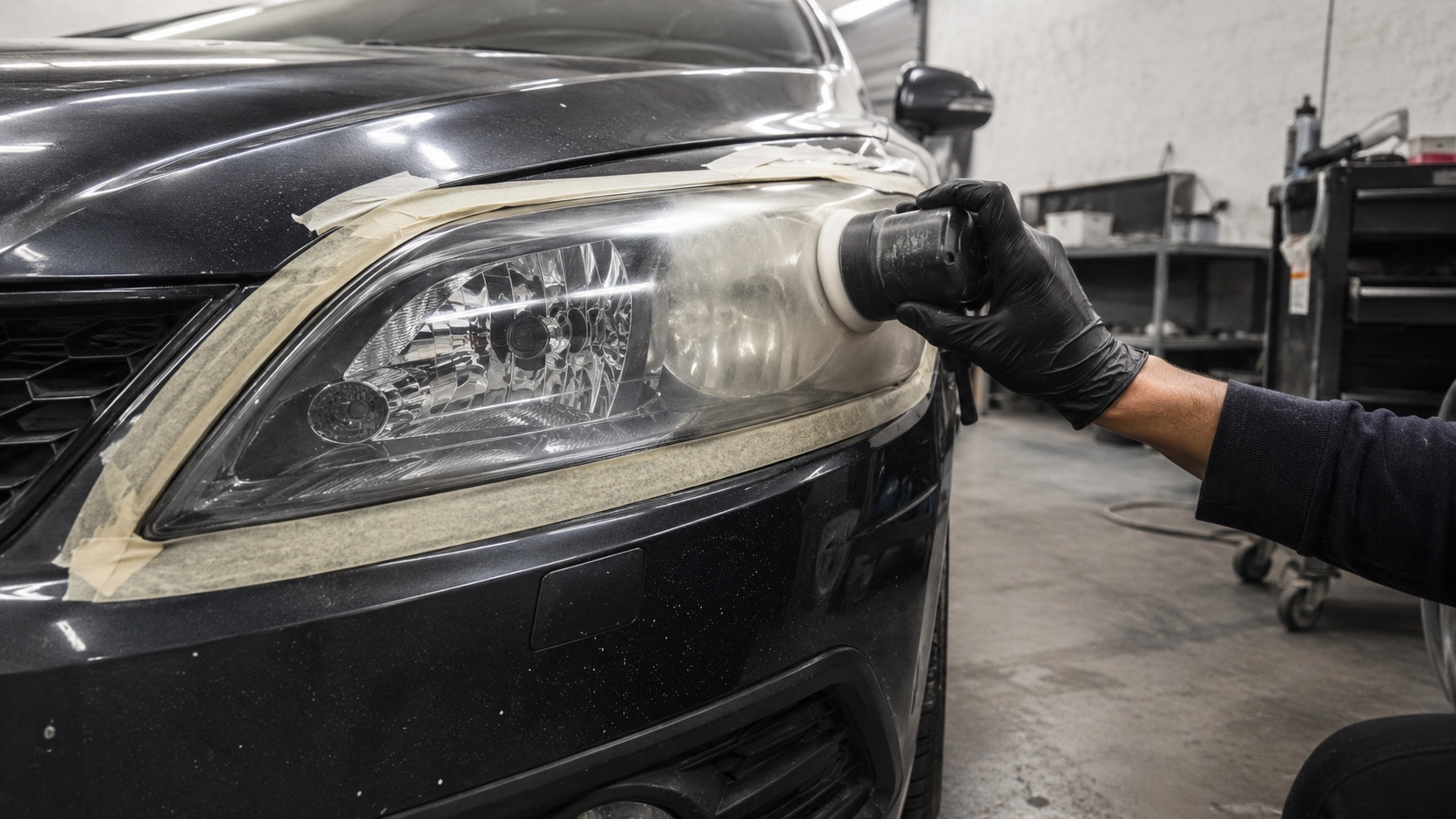
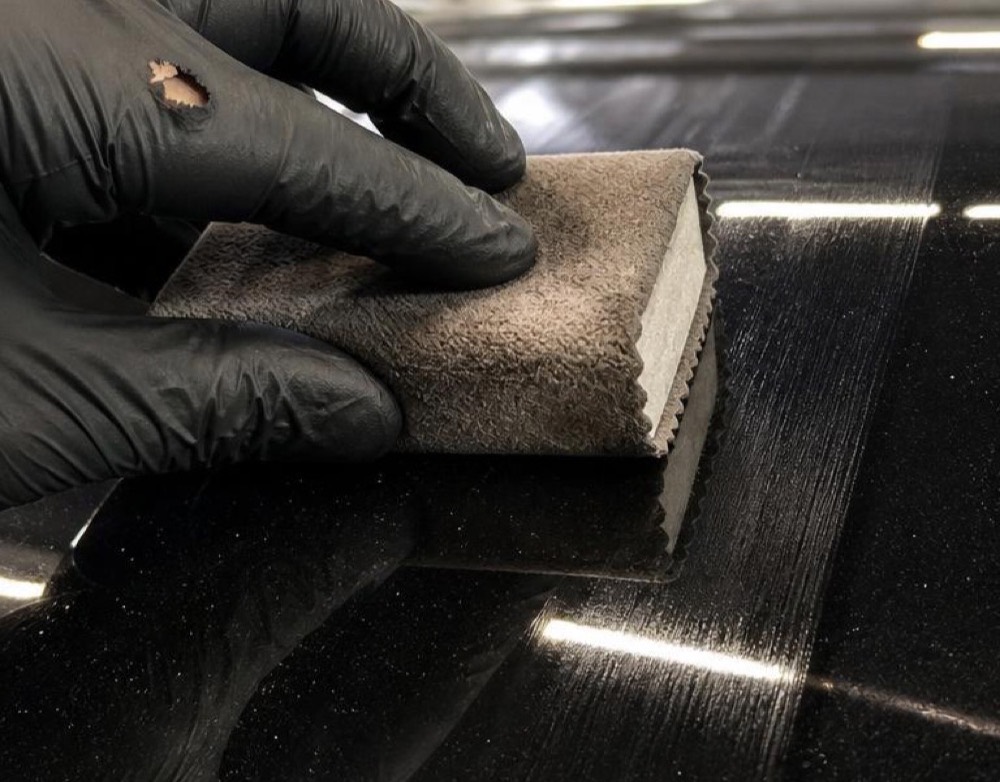
Protection preserves the surface exactly as it is. Under ceramic, swirls and fine scratches stay — and stand out more; under film they stay exactly where they are, for good. That's why on a car in use we measure the paint thickness and correct it first — on a new car that's usually unnecessary.
What we recommend to whom
- The car lives outside, you drive year-round and want less work washing it — ceramic.
- A new or premium car, lots of motorway miles, stone chips on the bonnet bother you — PPF on the front panels, ceramic on the rest.
- A car about to be sold, or an older car where it's about looks — polishing plus wax or sealant.
- A garaged car with low mileage — wax is enough; ceramic is comfort, not necessity.
Frequently asked questions
Does ceramic protect the paint from scratches?
From fine wash swirls, yes. From stone chips and mechanical damage, no — only PPF film does that.
Can I use an automatic car wash with ceramic?
A brush wash puts swirls in the paint regardless of ceramic. We recommend hand washing, which is far quicker with a coating.
Will PPF damage the paint when it's removed?
No, provided the paint is sound and the film is removed within its service life. We don't apply film over damaged or freshly repaired paint without assessing it.
How long does ceramic last?
Depending on the product and care, years. Brush washes, aggressive chemicals and standing in direct sun without washing shorten it.
Can PPF and ceramic be combined?
Yes, it's the most common combination: film on the front panels against stones, ceramic on the rest of the car for easier washing.
Does paint have to be polished before ceramic?
On a car in use, yes — otherwise existing swirls get sealed in under the layer. On a new car, correction usually isn't needed.
What to do now
Tell us the car's age, where it's parked and what bothers you about the paint, and attach a few daylight photos. We'll say whether ceramic, film or paint correction first makes sense on your car — and what it will cost.